Japanese Couple Ask Mom to Help Make Baby
In some respects, the Japanese health and social support system can be a little confusing when it comes to pregnancy. This is the example for Japanese and foreigners alike. From discount vouchers and booking infirmary beds to the different types of medical facilities, the system of care and support can all seem somewhat arcane.
The below is designed to requite an overview of what to look, what y'all need to practice, as well as hopefully provide a rough idea of overall expected costs. Equally a disclaimer, my authority on the bailiwick extends no farther than that granted to me by the many, many phone calls to hospitals, enquiries at authorities offices, and hours of searching Japanese websites and hospital homepages once my married woman became pregnant and the panic set in of realizing that I had no clue about who I was supposed to call or where I was supposed to get… Even so, I hope information technology volition provide some basis to get you off on the right basis should you lot find yourself in a like state of affairs.
Pregnancy & the Japanese Health Organisation
Pregnancy is not covered under general health insurance in Japan. In that location are two reasons for this. Firstly, considering being pregnant is not considered an disease or injury to oneself—the typical remit of health insurance. Secondly, because each pregnancy requires a unlike level of care there cannot be a fixed fee. Further, hospitals and clinics in Japan offering different levels of "service", from the hotel-like handling with your ain carve up room at the individual hospitals to a more standard level of care elsewhere.
To provide financial support to families, Japan offers "maternity vouchers" (妊産婦健康診査費用補助券, ninsanpu-hoken-hiyō-hojoken) to expecting mothers. These maternity vouchers are essentially discount vouchers which can be used at the hospitals and clinics to reduce the toll of the regular cheque-ups during pregnancy. The discounts offered by the maternity vouchers differ depending on where you live (although in the 23 wards of central Tokyo they are the aforementioned), as do the non-medical auxiliary services such equally free massages and house cleans post-nativity.
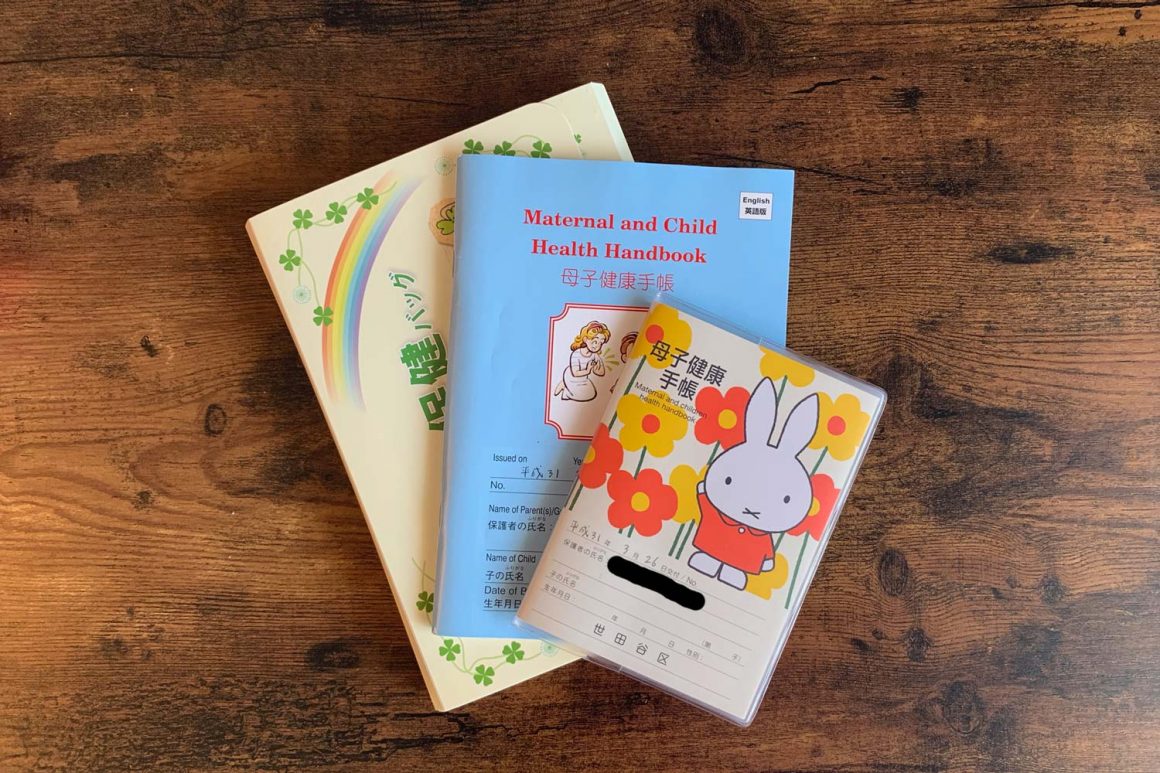
These maternity vouchers are included as office of a motherhood pack expecting mothers volition receive from the local metropolis part which also includes the Maternity and Children Health Handbook (母子健康手帳, boshi-kenkō-techō). This lilliputian book is very important and will need to be taken to all checkups and hospital visits. English versions of the Maternity and Children Wellness Handbook are also available.
Cheque-ups
If the habitation exam from the pharmacy is positive, then you'll want to have a doc confirm the event. This will cost about ¥5,000-x,000, and include a urine exam and an ultrasound (depending on the number of weeks). Once your pregnancy is confirmed, the commencement thing you should do is go to your city office to collect your Maternity and Children Health Handbook, as described above. To receive this y'all will need to submit a "pregnancy notification course" (妊娠届出書, ninshin-todokeshutsu-sho). Do not lose this pack. In principle, the maternity vouchers cannot be re-issued.
Yous can now outset your regular checkups. These checkups are called ninshin-kenkō-shindan (妊婦健康診断) in Japanese. You lot'll need to find a clinic (more than on the medical institutions below) and make your first appointment.
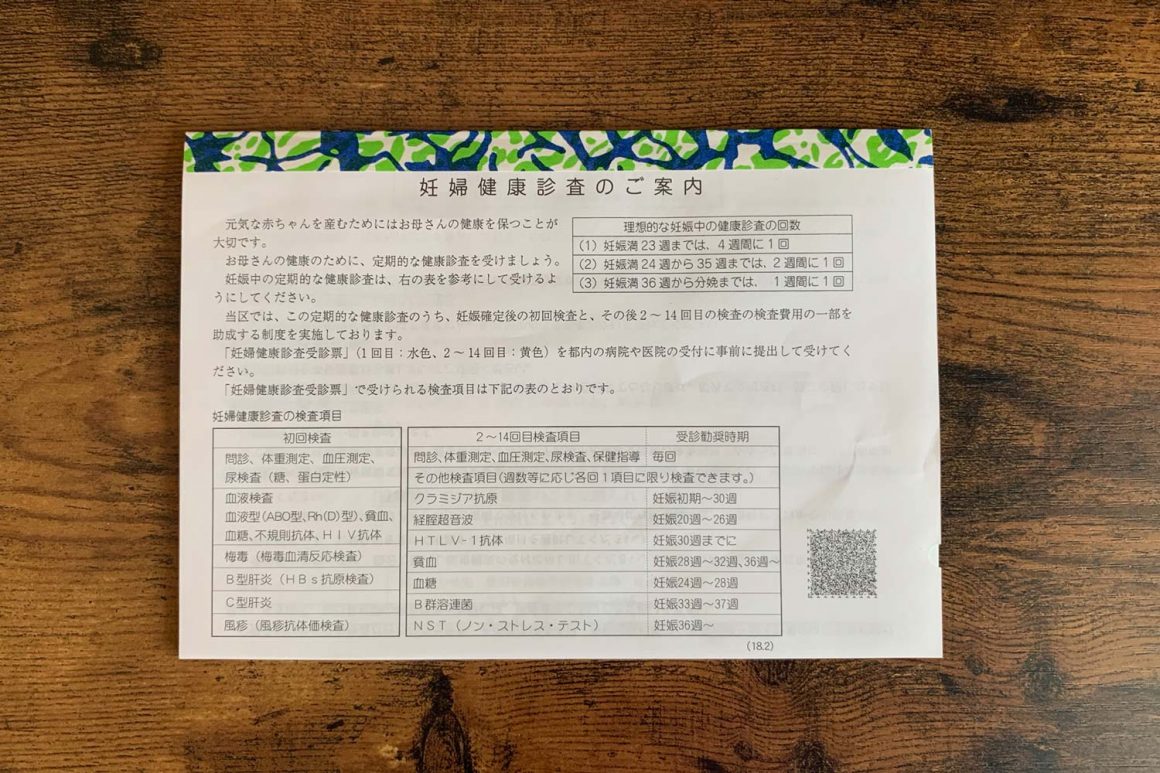
Generally speaking, expecting mothers volition take 14 checkups (and volition receive simply 14 maternity vouchers when they collect their Maternity and Children Health Handbook). Typically, these will go:
- 1 checkup per calendar month until your 23rd week
- 1 checkup every two weeks from the 24th until the 35th week
- Weekly checkups from the 36th week (40 weeks existence the average term of pregnancy)
Naturally, the bodily frequency volition depend on your ain situation following consultation with your doctor.
The motherhood vouchers act as discount vouchers; they do not cover the full price of the cheque-ups. With the vouchers, the toll of these cheque-ups roughly breaks down as follows but costs vary depending on the hospital or clinic, likewise as the medical diagnosis.
- ¥10,000 to ¥15,000 for the showtime health check-up which includes multiple blood tests.
- ¥3,000 to ¥5,000 per bank check-up after that (if blood tests are required this will increment the price to ¥x,000-15,000)
All told, you should expect the checkups to price about ¥100,000 ($865) in total (subsequently the discount vouchers). Additionally, you may accept costs relating to prescriptions for symptoms during pregnancy (east.grand. headaches, constipation relief, etc.), but these should exist covered under your general wellness insurance.
Choosing a Hospital
What may surprise some is that the majority of hospitals, clinics, and maternity homes in Japan crave expecting mothers to make a reservation for the nativity in advance. In Japanese, this is called bunben-yoyaku (分娩予約). You can begin making enquiries once you know your expected delivery engagement, which is commonly around the 8-10 week stage of pregnancy. Reservation enquiries need to be made even in the case where you lot're going for regular check-ups to the same hospital or clinic where yous want to deliver (and thus the doctors and nurses are fully aware of your expected delivery engagement). This is because some women choose to give birth at hospitals dissimilar to their regular check-up place considering, for example, they want to travel dorsum to their hometown to give birth so that they tin be closer to their parents. In any case, the more popular hospitals become booked quickly and so it'southward important to act fast. Y'all will need to pay a deposit at the time of reservation. This differs by infirmary but information technology seems that betwixt ¥100,000 ($865) and ¥200,000 ($i,730) is common (more on costs later).
Different some other countries, women spend on average about six days in hospital in Japan from the time between going into labor and leaving the hospital with their newborn. Accordingly, choosing where to deliver requires a degree of research and planning. Broadly speaking, in that location are iii types of medical institutions in which mothers tin give birth.
1. General Hospitals & Academy Hospitals
Full general hospitals and academy hospitals are favoured past some because they accept the facilities and medical staff on manus to bargain with any complications that might ascend during childbirth. The demerits are that waiting times for checkups can sometimes be longer, you may not see the same doctor each time you go, and the food and full general level of "service" might not exist every bit good every bit at the private hospitals and clinics.
2. Individual Hospitals
Not all private hospitals (個人病院, kojin-byōin) or clinics (診療所, shinryō-sho) have facilities to deliver a baby. Some volition exist able to provide regular checkups including ultrasounds and claret tests, but require the expecting mother to deliver at some other hospital; others will specialize in something else entirely. Private hospitals and clinics are essentially the same matter (the distinction is one of size in terms of number of beds). Private hospitals and clinics that exercise have childbirth facilities volition normally be able to offer a improve level of comfort versus general hospitals. This might mean more dedicated and personalized care, better food, a private room, or the benefit that the doc with y'all for the regular bank check-ups should also exist present at the nativity. Obviously, this actress level of intendance and service comes at a price, and private hospitals and clinics tin be considerably more than expensive than general or university hospitals. Nevertheless, in "higher risk" cases such equally where the female parent is pregnant with twins or is older, the private hospital may propose delivery at a general infirmary.
three. Maternity Homes
Maternity homes (助産所, josan-sho) are clinics that specialize but in commitment. They exercise not accommodate regular checkups. Further, they cannot perform more complicated deliveries such as a Caesarean section. Maternity homes generally provide a more homely surroundings for natural births, and are typically cheaper than full general and individual hospitals.
To add together some context to the to a higher place, roughly speaking, just over half of women in Japan choose to give birth in a private hospital; just under half in a general or academy infirmary; and less than five% opt for a maternity habitation.
Understand the Rules & Facilities
Hospitals and clinics sometimes have certain rules and conditions by which families must abide. For case, some clinics are female just and practice not let males to accompany their partners; some will not deliver the baby if the mother has not been attention that clinic or hospital for regular checkups since early on in their pregnancy. Consultation hours too differ; notably, non all places offer appointments at the weekend.
Further, what the medical institutions can and cannot offering in terms of medical services also differs. For case, not all places can offer "painless delivery" (an epidural injection during labor to relieve hurting); others accept more than advanced ultrasound technology, and then on. Incidentally, natural births are encouraged in Japan and places offering epidurals limited, with those that do oftentimes merely making them available during normal work hours—non much help if you go into labour at midnight. Nihon is too one of a scattering of countries where episiotomy is still widely practiced.
Across that, medical institutions are chosen based on word-of-mouth, reputation, proximity to home, and and so on. Many expecting mothers volition visit multiple places to come across the facilities, and the home pages of the private hospitals and clinics will frequently take photographs of comfortable hotel-like rooms or well-prepared courses dinners to entice you.
What about English speaking staff?
In that location are places in Tokyo that accept English-speaking staff, merely many of these are located in Minato Ward—unsurprising given that a asymmetric number of foreigners live here. Equally, hospitals which don't actively promote their ability to provide services in English may nevertheless have doctors and nurses with good language skills. If your Japanese isn't adept enough to make such enquiries and so you'll demand to inquire a friend or notice a place that is geared towards foreigners. In Tokyo, your best bet is hospitals and clinics in Minato Ward and Shibuya Ward.
Changing Hospitals
In cases where you wish to change clinics (maybe due to a move during pregnancy) or intend to evangelize at a hospital that is not where you have your regular checkups, you volition demand a referral letter (紹介状, shōkaijō) from your current hospital or clinic. This needs to be written past the referring dr. and will cost most ¥3,000. This referral letter, along with examination results, will then be submitted to the new hospital.
Typically, y'all volition demand to accept your regular bank check-ups at the hospital or clinic where yous volition deliver from about the 32nd week of your pregnancy, regardless. In other words, you lot cannot continue to nourish a divide clinic all the style upward until labor and and then turn up at the other hospital just to give birth. They understandably desire to examine y'all in person beforehand.
The Costs
As mentioned above, women spend on average six days in hospital for childbirth in Japan. 2016 statistics show that nationwide ¥505,759 ($iv,375) was the average cost of a natural nascency. In Tokyo, this creeps up to ¥621,814 ($5,379). These figures are averages and there are some paying considerably more. You tin see the statistics by prefecture and type of institution here (Japanese merely).
To support the financial brunt of childbirth, families are given a "childbirth lump-sum allowance" (出産育児一時金, shussan-ikuji-ichikin). This amount is ¥420,000 ($three,633) per child. Therefore, taking the national boilerplate figure of ¥505,759 ($4,375), the amount that you would have to pay from your own pocket is this effigy less the childbirth lump-sum allowance, or about ¥86,000 ($744).
It used to be the example that families would demand to pay the total medical costs of childbirth directly to the medical institution where the mother gave birth, but in 2011 a direct payment organisation was introduced which allows the medical institution to merits the childbirth lump-sum allowance on your behalf, thus reducing the burden of an otherwise large payment.
Preparing for Delivery
There are many more qualified medical websites to talk about grooming for delivery but the beneath are a couple of of import points for giving birth in Japan.
Hospital Bag
Like any country, expecting mothers should have hospital bag prepared as their due date approaches. Simply with mothers staying in hospital for about six days postal service-birth many have full suitcases prepared for the stay. This means more clothes, more personal items (due east.g. phone chargers, books, magazines, etc.), as well as the following items:
- Motherhood and Children Wellness Handbook
- Health insurance card
- Inkan / Seal (if you take ane—foreigners often only sign instead)
- Patient Registration Carte du jour (診察券, shinsatsu-ken)
Annals for a "Maternity Taxi"
Unless you have your own ship, yous're going to be relying on a taxi to become you lot to the hospital. While taxis are everywhere in Tokyo, you don't desire to exist frantically running up and down the route in the middle of the dark trying to hail one while your partner is back home in pain. The Japan Taxi app is okay in the Tokyo expanse but it's non something I would want to rely on in an emergency. Fortunately, many taxi companies offer a maternity service (陣痛タクシー, jintsū-takushii). Yous register your details online and so you have access to a special hotline which jumps you to the front of the queue and is open up 24 hours per twenty-four hours. Websites for a few of the primary companies: Nihon Kotsu, Ebara Kotsu, KM Taxi. The companies charge effectually ¥500 on top of the metered accuse for the service.
Mail Nascence
Registering the Birth
Offset, you need to register the birth at your local city office inside 14 days and to practise this you volition demand a nativity certificate issued by the medical staff at the infirmary where your child was born. At the local urban center part you should submit a Birth Notification Form (出生届, shussan-todoke). Besides take your Maternity and Children Health Handbook because you volition given a small certificate which you lot should cut out and stick in your handbook.
Yous should then utilise for a Birth Notification Certificate of Acceptance (出生届受理証明書, shusshōtodoke-juri-shōmeisho) at the local city office which, considering a Family Annals is not created for strange nationals, is often used as an official Birth Document. You may too need this Birth Notification Certificate of Credence to annals the birth the embassy or consulate of your home country.
Applying for Permission to Stay
Children of foreign nationals born in Japan are granted permission to stay for sixty days without any condition of residence. If your child will stay in Japan longer than 60 days and you hold a resident status other than Permanent Resident (特別永住権, tokubestu-eijūken), you need to brand an Application for Certificate of Eligibility (在留資格取得許可申請, zairyū-shikaku-shutoku-kyoka-shinsei) at the Japanese Immigration within 30 days of birth. This can be done even if your child does not yet have a passport. Required documents volition depend on your resident condition, but typically you lot will need to submit the following documents.
- An application form (bachelor at immigration)
- A questionnaire for both parents (only one needs to be nowadays but you need to know the passport number and residence card number of your partner). The questionnaire is available at immigration.
- Residence Certificate (住民票, jūminhyō) for all members of the family including your child.
- Nascence Notification Certificate of Credence (出生届受理証明書, shusshōtodoke-juri-shōmeisho)
- Tax Certificate (課税証明書, kazei-shōmeisho)
- Document of Taxation Payment (納税証明書, nōzei-shōmeisho)
- Certificate of Employment (在職証明書, zaishoku-shōmeisho)
The issuance of a residence bill of fare for your child typically takes 14 days (the card will not testify your kid's photo and so you do non need to set up one for the awarding). In order to collect the residence card you would ordinarily demand to bear witness your child's passport, but this may not take been issued yet. Instead the immigration bureau volition accept a document or receipt from your embassy showing that you take applied for one. The length of validity on your child's residence card volition depend on your condition equally the applicant.
Child Support
To support families with the price of raising a child, child benefit is provided to all families. It is called jidō-teate (児童手当) in Japanese. The application for child benefit payments must exist made past the "householder", which is defined equally the parent with the highest income. How much you get per kid, per month depends on the income level of the householder. The minimum regardless of income is ¥5,000, and the maximums are every bit follows:
- Until 3 years of age: ¥15,000 per calendar month
- From three until 12 years of historic period: ¥10,000 per month (¥15,000 from the third child)
- From 12 until 15 years of age: ¥10,000 per month
- Over xv years of age: No further payments
The income limits depend on the number of dependents and are shown on the Cabinet Office's child benefit page, only every bit at the terminate of 2018 the income limit for the householder with a spouse and two children, for example, was ¥9.6 one thousand thousand. Minato Metropolis'south website is also a practiced source for updated information in English.
How do I apply for kid benefit?
You need to submit an awarding for child benefit payments (認定請求書, nintei-seikyūsho) within 15 days from the day after birth. Payments are fabricated in February, June, and Oct of each year to the applicants banking concern account. Note that no proof of income is required at the fourth dimension of application, but to ensure that payments are in accord with changing circumstances, each yr in June you need to submit an "update notification" (現況届, genkyō-todoke) to the municipal offices.
Source: https://www.japanistry.com/childbirth-in-japan/

Post a Comment for "Japanese Couple Ask Mom to Help Make Baby"